

Du 23 octobre au 27 novembre 2010 | From October 23, to November 27, 2010
*An English translation will follow
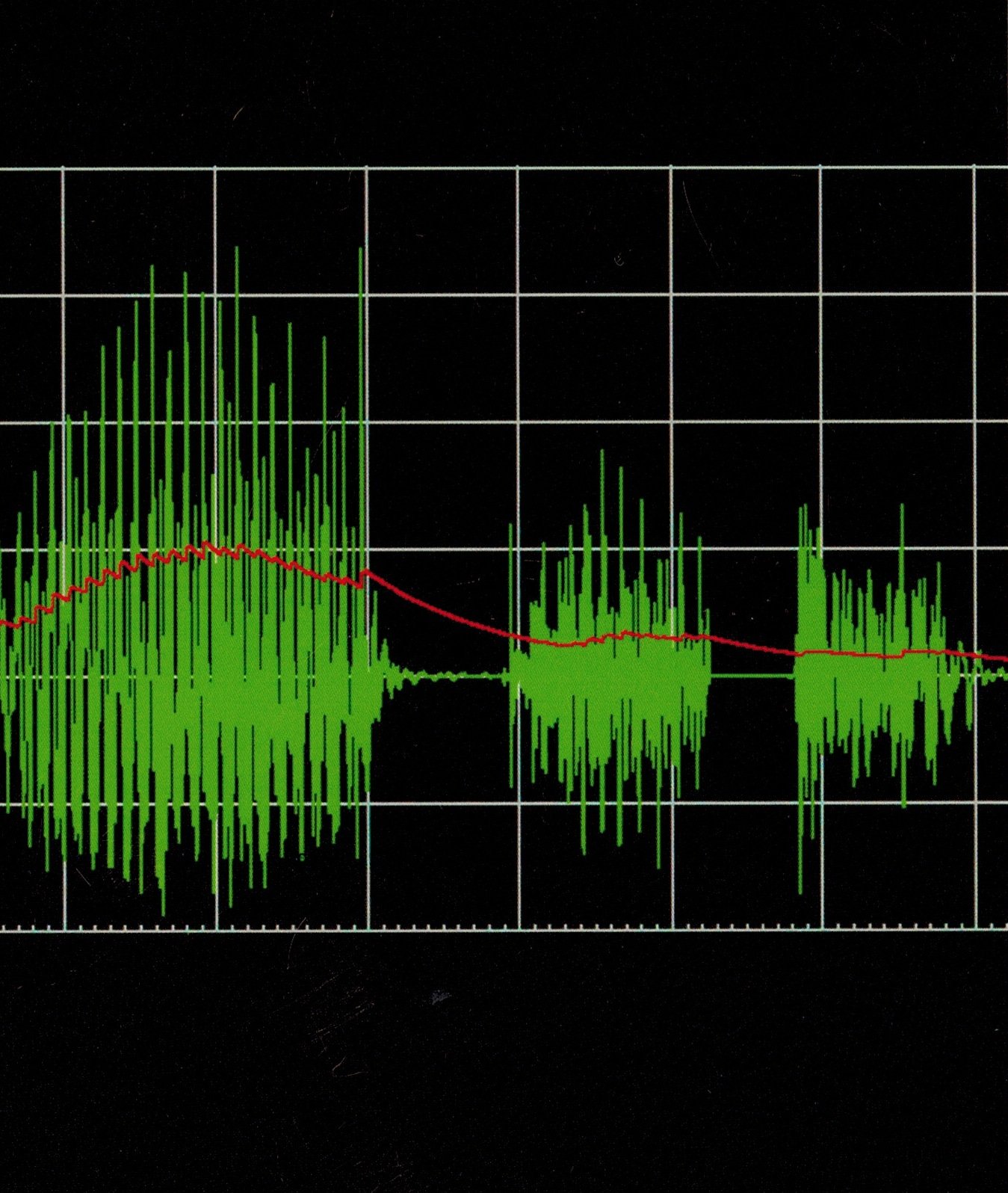
Cette installation est constituée de quatre unités sculpturales indépendantes, comprenant chacune une grande coupole concave (environ 125 cm de diamètre), laquelle est installée à la verticale et intégrée au centre d’un muret (environ 180 cm de côté). Derrière chaque coupole, un haut-parleur est appuyé, diffusant des sons différents à travers la matière du plâtre. Le but étant de créer une tension entre la forme, de facture très rigide voire clinique et les sons diffus et informes s’en dégageant.
Le son est travaillé dans une facture très simple, une superposition de textures (crépitements, craquements, frottements) se déployant lentement avec des variations subtiles. Tous les sons sont produits en temps réel par des moteurs, solénoïdes, et des systèmes de microphones, amplifiés, transformés et diffusés simultanément. De plus, des microphones montés sur des mécanismes articulés produisent des modulations de larsens créant une sorte de mélodie.
Mathieu Valade est originaire de Salaberry-de-Valleyfield. Son travail a été présenté au MAC VAL (Paris), au Musée national des beaux-arts du Québec et dans plusieurs centres, galeries et évènements d’envergures au Canada, au Brésil, aux États-Unis, en France, en Espagne, en Grèce et en Suède. Il a réalisé des œuvres d’art public dans différentes villes du Québec. Ses créations figurent dans plusieurs collections dont celles MNBAQ et du Musée d’art contemporain de Baie-Saint-Paul. Il réside à Chicoutimi où il enseigne la sculpture et le dessin à titre de professeur à l’UQAC.
La série Regular 8 de Sara Angelucci ramène le film à ses origines dans l'image fixe, tout en attirant notre attention sur la famille nucléaire d'après-guerre des années 1950. Cette période, caractérisée par une consommation croissante, une nouvelle mobilité et une population nombreuse aspirant à la réussite de la classe moyenne, a également vu se répandre les films amateurs en 8 mm ou « Regular 8 ». Jouant sur l'interférence idiosyncrasique causée par le système de marquage par perforation de Kodak – une série de chiffres apparaissant sur les dernières images de chaque film –, Angelucci fait référence de manière poignante aux derniers instants de ces films, où une série de points blancs danse à l'écran alors que l'action touche à sa fin. Préservées, mais déjà en voie de dissolution, comme en témoignent les perforations envahissantes, ces images décrivent un moment intermédiaire. Se situant quelque part entre la caractérisation de la photographie et du cinéma par le théoricien André Bazin, ces moments photographiques sont suspendus comme des « insectes dans l'ambre », tout en passant perpétuellement d'une image à l'autre comme des « changements momifiés ».
Sara Angelucci est une artiste torontoise qui travaille dans les domaines de la photographie, de la vidéo et de l'audio. Son travail explore les photographies et les films vernaculaires, analysant le contexte original dans lequel les images sont réalisées. Attirant l'attention sur les conventions de la création d'images, son travail met en avant le rôle culturel que jouent les images vernaculaires dans la mise en scène d'histoires particulières, la création d'histoires et la commémoration. Elle s'intéresse à attirer notre attention en dehors du cadre de l'image, en soulignant les conditions sociales et historiques qui constituent la base tacite de l'image. Le travail d'Angelucci est passé de l'examen des archives familiales et de l'immigration à une analyse et une interprétation plus larges des photographies anonymes ou trouvées. Dans ses récents projets photographiques, vidéo et audio, Angelucci s'inspire de l'histoire de la photographie, ainsi que des histoires naturelles et sociales. Ses projets récents ont porté une attention particulière aux conditions historiques du travail des femmes. Sara Angelucci a obtenu une licence à l'université de Guelph et une maîtrise en beaux-arts au Nova Scotia College of Art and Design. Elle a exposé ses photographies à travers le Canada dans le cadre d'expositions individuelles à la galerie d'art de l'université York, au Mois de la Photo à Montréal, à Vu à Québec, au Toronto Photographers Workshop, au MacLaren Art Centre, à la galerie d'art de Hamilton, à la Richmond Art Gallery et à la galerie d'art de l'université St. Mary's à Halifax.
This installation consists of four independent sculptural units, each comprising a large concave dome (approximately 125 cm in diameter), which is installed vertically and integrated into the center of a low wall (approximately 180 cm on each side). Behind each dome, a loudspeaker is placed, diffusing different sounds through the plaster material. The aim is to create tension between the very rigid, even clinical form and the diffuse, formless sounds emanating from it.
The sound is crafted in a very simple manner, with a superimposition of textures (crackling, creaking, rubbing) unfolding slowly with subtle variations. All sounds are produced in real time by motors, solenoids, and microphone systems, amplified, transformed, and broadcast simultaneously. In addition, microphones mounted on articulated mechanisms produce feedback modulations that create a kind of melody.
Mathieu Valade is originally from Salaberry-de-Valleyfield. His work has been exhibited at MAC VAL (Paris), the Musée national des beaux-arts du Québec, and in several major centers, galleries, and events in Canada, Brazil, the United States, France, Spain, Greece, and Sweden. He has created public artworks in various cities across Quebec. His creations are included in several collections, including those of the MNBAQ and the Musée d'art contemporain de Baie-Saint-Paul. He lives in Chicoutimi, where he teaches sculpture and drawing at UQAC.
Sara Angelucci’s Regular 8 series returns film to its origin in the still image, while turning our attention to the post-war nuclear family of the 1950s. A period characterized by growing consumption, new mobility, and a large population aspiring to middle class success, it also witnessed the spread of eight millimeter or “Regular 8” home movies. Playing on the idiosyncratic interference caused by Kodak’s punch-hole tagging system—a series of numbers appearing across the end frames of each film – Angelucci makes poignant reference to the last moments of such films, where a series of white dots dances across the screen as the action winds to a close. Preserved, yet already in the process of dissolution, as evidenced by the invading punch holes, these images describe a moment of in-between. Existing somewhere between film theorist Andre Bazin’s characterization of photography and film, these photographic moments are suspended like “insects in amber” while shifting perpetually between frames as “change mummified.”
Referencing scenes from found and borrowed films, Angelucci’s staged photographs portray celebrations, holidays, and outings – where family and friends were often recast in idealized, cinematic versions of themselves. Here, everyone dressed up for, and played a role in, the portrayal of the happy family. By arresting such moments, Angelucci both celebrates and interrupts the formation of such identities, pointing to the tensions that may exist outside of the frame. Using the qualities of analogue photography as the basis for a hybrid digital practice, Angelucci dips into the wells of multiple histories and processes. In their convergence, she captures the still revolutionary force of the “mirror with a memory” to fascinate, disturb, and seduce.
Sara Angelucci is a Toronto-based artist working in photography, video and audio. Her work explores vernacular photographs and films, analyzing the original context in which images are made. Drawing attention to conventions of image making, her work foregrounds the cultural role vernacular images play in framing particular stories, creating histories, and memorialization. Her interest lies in drawing our attention outside of the image frame, pointing to the social and historic conditions which are the unspoken basis of the image. Angelucci’s work has developed from an examination of the family archive and immigration, to a broader analysis and interpretation of anonymous/found photographs. In recent photography, video, and audio projects, Angelucci draws from the history of photography, as well as natural and social histories. Recent projects have brought particular attention to the historic conditions of women's labour.
Sara Angelucci completed her BA at the University of Guelph and her MFA at the Nova Scotia College of Art and Design. She has exhibited her photography across Canada in solo exhibitions at the Art Gallery of York University, Le Mois de la Photo in Montreal, Vu in Quebec City, the Toronto Photographers Workshop, the MacLaren Art Centre, the Art Gallery of Hamilton, the Richmond Art Gallery, and the St. Mary’s University Art Gallery in Halifax. Internationally she has had solo exhibitions at the Canadian Cultural Centre in Paris, the Lianzhou Photography Festival and the Halsey Institute of Art in Charleston.
