

Du 18 janvier au 2 mars 2013 | From January 18 to March 2, 2013
Vernissage le 18 janvier | Opening: January 18
*An English translation will follow
Occurrence espace d’art et d’essai contemporains, la Galerie Simon Blais, ainsi que VOX, centre de l’image contemporaine vous convient à un événement en trois lieux qui vous fera découvrir des corpus d’œuvres peu connus d’Irene F. Whittome. Les éditions du passage procéderont à cette occasion au lancement d’une monographie de l’artiste, réalisée en partenariat avec VOX, centre de l’image contemporaine.
Bestiaire - Présenté chez Occurrence
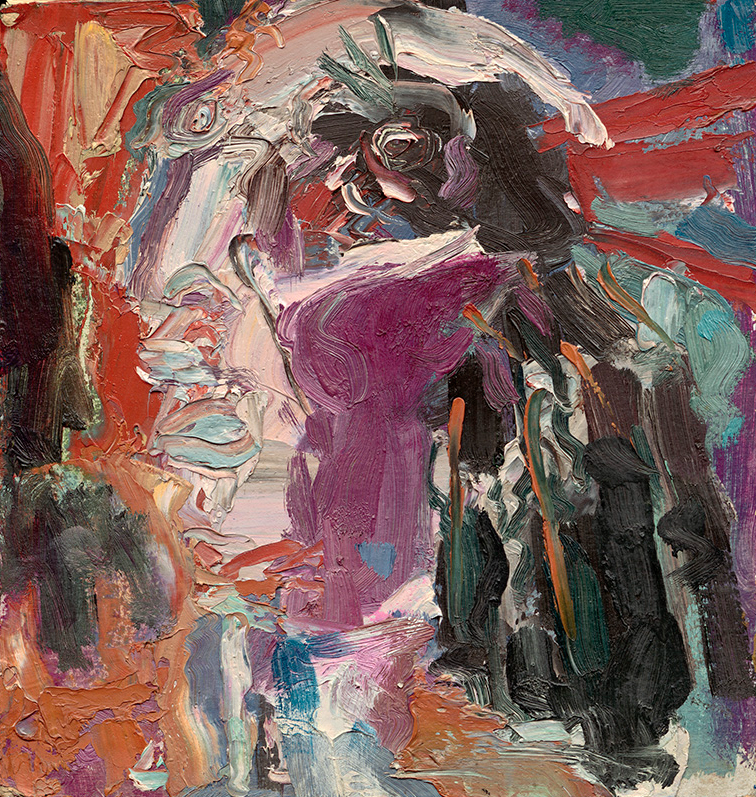
Cet impressionnant corpus d’œuvres aux figures biomorphiques et archétypales s’inscrit dans la lignée de ses dessins de facture expressionniste, produits entre les années 1963 et 1967. Ces tableaux saisissants par leur très grand format vertical, leurs couleurs et textures exacerbées, leur iconographie sauvage et agressive et par les gestes que l’on devine exaltés de la peintre nous ramènent non seulement à une période importante d’apprentissage de l’acte créatif chez Whittome, mais à un moment révélateur dans le parcours de l’artiste et l’évolution de son œuvre. Ces corps mi-hommes, mi-animaux plus grands que nature, au squelette cambré et aux extrémités palmées, sortes d’insectes terrifiants, nous plongent dans un univers troublant, de nature à la fois archaïque et mythologique. Le corpus exceptionnellement méconnu de Bestiaire, composé d’une quinzaine de très grands tableaux et d’une série de portraits, n’a jamais été présenté dans son entier et fait ici l’objet d’une exposition inédite à Occurrence.
– Mona Hakim
Room 901 - présenté chez VOX
Au cours de l’été 1980, Irene F. Whittome finalise un important cycle de travail. Son atelier est alors vide et elle entreprend la réalisation de Room 901. Tout le matériel qui se trouvait dans l’atelier est accumulé dans un coin restreint, les murs de briques et les colonnes sont repeints en blanc. L’espace est préparé à la manière dont un peintre apprête sa toile avant de l’enduire de pigments. L’atelier de la rue Saint-Alexandre devient alors le support d’une intervention spécifique qui se transformera pendant près de deux ans : d’octobre 1980 à juillet 1982. Whittome peint une forme minimale sur le mur adjacent aux fenêtres voûtées, laquelle semble dans toutes les étapes de sa modification tendre vers le motif minimal de la croix. Au terme de ce travail, en octobre 1982, Whittome a produit plus de 1500 photos, une vidéo, des boîtes-maquettes et trois expositions. Trente ans plus tard, Room 901 fait l’objet d’une réflexion approfondie sous la forme d’une réactivation présentée à VOX et d’une monographie publiée aux éditions du passage.
– Marie J. Jean
Aftermath - présenté à la Galerie Simon Blais
À la fin des années 1970, Irene F. Whittome délaisse la fabrication de formes en papier moulé pour la cire qui deviendra un de ses matériaux privilégiés. Elle recouvre des objets trouvés, des constructions de cartons et de planches d’encaustique (pigments colorés mêlés à de la cire et à de l’essence). L’utilisation de cette lente technique d’application jumelée à un processus naturel (les volumes encaustiqués étaient exposés à la lumière du jour) permettront à l’artiste d’atteindre des textures et des couleurs rappelant la patine du temps et de figer, par un processus de stratification, différentes expériences vécues dans le passé, le présent et le futur. En 1980, l’artiste intensifie l’utilisation de l’encaustique et des pigments de couleur puis réalise une nouvelle série de tableaux-objets. Constituées d’agglomérations de papier, de portes, de panneaux et de cartons recouverts de cire et de pigments noirs et blancs, ces pièces intitulées Encaustics ont été présentées à la Galerie Yajima, Montréal en 1980 puis intégrées à la réexposition de Room 901 à l’Alberta College of Art, Calgary en 1983; elles seront à nouveau exposées avec une sélection d’œuvres de la série Room 901 à la Galerie Simon Blais dans le cadre de l’exposition Aftermath.
– Claudine Roger
Occurrence espace d’art et d’essai contemporains, la Galerie Simon Blais, ainsi que VOX, centre de l’image contemporaine invite you to a three-part event that will introduce you to a little-known body of work by Irene F. Whittome. Éditions du passage will mark the occasion by launching a monograph on the artist, produced in partnership with VOX, centre de l’image contemporaine.
Bestiaire - on show at Occurrence
This impressive body of work featuring biomorphic and archetypal figures is in line with her expressionist drawings produced between 1963 and 1967. These striking paintings, with their very large vertical format, exaggerated colors and textures, wild and aggressive iconography, and the painter's seemingly exalted gestures, take us back not only to an important period of learning about the creative act for Whittome, but also to a revealing moment in the artist's career and the evolution of his work. These larger-than-life half-human, half-animal creatures, with arched skeletons and webbed extremities, resembling terrifying insects, plunge us into a disturbing universe that is both archaic and mythological. The exceptionally little-known Bestiaire corpus, consisting of some fifteen very large paintings and a series of portraits, has never been presented in its entirety and is now the subject of a unique exhibition at Occurrence.
-Mona Hakim
Room 901 - on show at VOX
During the summer of 1980, Irene F. Whittome completed an important cycle of work. Her studio was now empty, and she began work on Room 901. All the materials that had been in the studio were piled up in a small corner, and the brick walls and columns were repainted white. The space was prepared in the same way a painter prepares a canvas before applying pigment. The studio on Rue Saint-Alexandre then became the medium for a specific intervention that would transform over a period of nearly two years: from October 1980 to July 1982. Whittome painted a minimalist shape on the wall adjacent to the arched windows, which, in all stages of its modification, seemed to tend toward the minimalist motif of the cross. By the end of this work, in October 1982, Whittome had produced more than 1,500 photos, a video, model boxes, and three exhibitions. Thirty years later, Room 901 is the subject of an in-depth reflection in the form of a reactivation presented at VOX and a monograph published by Éditions du Passage.
-Marie-J. Jean
Aftermath - on show at Galerie Simon Blais
In the late 1970s, Irene F. Whittome abandoned the use of molded paper forms in favor of wax, which would become one of her preferred materials. She covered found objects, cardboard constructions, and encaustic panels (colored pigments mixed with wax and turpentine) with wax. The use of this slow application technique, combined with a natural process (the encaustic volumes were exposed to daylight), allowed the artist to achieve textures and colors reminiscent of the patina of time and to freeze, through a process of stratification, different experiences from the past, present, and future. In 1980, the artist intensified his use of encaustic and colored pigments and created a new series of painting-objects. Consisting of agglomerations of paper, doors, panels, and cardboard covered with wax and black and white pigments, these pieces, entitled Encaustics, were presented at the Yajima Gallery in Montreal in 1980 and then included in the re-exhibition of Room 901 at the Alberta College of Art, Calgary in 1983. They were exhibited again with a selection of works from the Room 901 series at the Galerie Simon Blais as part of the exhibition Aftermath.
-Claudine Roger
